If you’ve ever spent 10 minutes panicking because your $80 smart water bottle slipped out of your hand into the kitchen sink mid-workout, or because you spilled a iced coffee all over it during a morning commute, you’ve probably asked the same question: “Is this thing actually waterproof?” As a smart water bottle supplier who’s spent the last 7 years designing, testing, and shipping these bottles to customers across the globe, I get this question at least once a week—from casual gym-goers to busy parents, from tech reviewers to other industry peers. It’s not a trivial question, either; cheaply made smart bottles can stop working after one accidental dunk, and no one wants to throw away a bottle that cost more than a standard reusable one because of a little water damage. Today, I’m breaking down what waterproof ratings actually mean for smart water bottles, how we test ours, and what you should look for when you’re shopping around for one that can keep up with your life. Smart/Multi-functional Water Bottle

First, let’s talk about what “waterproof” even means, because most people use the term incorrectly, and that misunderstanding is at the root of most bottle-related frustrations. In the consumer tech world, waterproof isn’t a binary “can get wet or not”—it’s a graded scale based on standardized tests set by the International Electrotechnical Commission (IEC), the same group that sets ratings for phones, smart watches, and other electronic gadgets. The most common rating you’ll see is an IP (Ingress Protection) code, which has two numbers: the first is for solid particle protection (like dust, dirt, sand), and the second is for liquid intrusion. For smart water bottles, the solid rating doesn’t matter as much as the liquid one, so we focus on that second number.
Let’s get specific: the liquid ratings start at 0 (no protection at all) and go up to 8. Wait—you might have heard of IP67 or IP68, right? Those are the gold standards for most consumer electronics. But here’s a key detail most suppliers won’t tell you: IP67 and IP68 are designed for immersion in water, but they don’t cover every type of water exposure, and they don’t all test the same way. Let’s break down what each level means, in plain terms you can actually use: IPX1 means the bottle can handle dripping water at a 15-degree angle for 10 minutes—fine for a light rain, but not for getting splashed at the gym. IPX2 means it can handle dripping water at a 15-degree and 75-degree angle, for two 10-minute periods—better, but still not for dunking. IPX3 through IPX6 are for spraying water, from a light rain shower (IPX3) to high-pressure jets (IPX6)—these are great for cleaning the bottle with a spray nozzle, or standing under a tap for a quick rinse, but they’re not meant to be fully submerged. IPX7 is immersion in 1 meter (about 3 feet) of water for 30 minutes—great if you drop it in a pool or a bucket of water by accident, and IPX8 is immersion in deeper water for longer, usually up to 3 meters for 2 hours, which is for things like snorkeling.
Now, here’s the thing: most smart water bottle manufacturers will claim IP67 or IP68, but those ratings have a big catch—they only apply to the electronic components inside the bottle, not the entire bottle itself. Wait, that’s a game-changer, right? Because if the sensor (the part that tracks your water intake, the battery, the Bluetooth module) is IP67 rated, but the seam where the lid attaches to the body isn’t sealed properly, or the sip lid has a tiny gap, then water can get in through those spots and damage the electronics. That’s why, when we design our bottles, we don’t just test the internal components in a lab—we test the entire finished bottle, top to bottom, because even the smallest weak point can break the whole thing.
Let me walk you through our testing process, because this is what makes our bottles different from the cheaper ones you’ll find on Amazon. First, every component is tested individually: the smart lid (which has the sensor, battery, and Bluetooth) is put through a pressure chamber that mimics 1 meter of water pressure for 30 minutes, to make sure no water seeps in. The body of the bottle—usually stainless steel or BPA-free Tritan—goes through a leak test too, because even a tiny pinhole in the stainless steel can let water in over time, or cause condensation. Then, we put the entire assembled bottle through real-world tests, not just lab ones. For example, we drop bottles into 3 feet of pool water for 30 minutes, fish them out, and test the sensor and Bluetooth to make sure they still work. We spray them with a high-pressure garden hose at 100 PSI (that’s higher than a typical rain shower) for 5 minutes, then take them apart to check for water inside the lid. We even submerge them in soapy water for 1 hour, because a lot of people wash their bottles in the dishwasher, and dishwashers spray high-temperature, high-pressure water—wait, yes, that’s another point: if you put your bottle in the dishwasher, even an IP67 rated one might not hold up, because dishwasher water is at a higher temperature and pressure than standard test conditions, so that’s a separate thing we warn customers about.
But here’s another common misconception: waterproof isn’t the same as “washable.” A lot of customers ask if they can throw their smart bottle in the dishwasher, and the short answer is: it depends. If you have a bottle that’s rated for dishwasher use, that means the seal is designed to handle the heat and pressure of a dishwasher cycle. But most smart bottles—even the ones with IP67 ratings—are not dishwasher safe, because the high heat can degrade the rubber seals over time, which can create tiny gaps. That’s why we recommend hand-washing our bottles with warm, soapy water, and using a soft brush to clean the sip lid. We’ve had customers try dishwashing our bottles and come back saying their sensor stopped working, and when we take a look, it’s almost always because the seal at the base of the lid was damaged by the high heat. It’s not a flaw in the IP rating—it’s a misunderstanding of what the rating is actually for.
Another thing to consider: what kind of water exposure are you actually going to put your bottle through? If you’re the type of person who takes your bottle to the gym, sweats on it, drops it in the shower every morning, or spills water on it while you’re driving, an IPX4 or IPX5 rating is more than enough. Those ratings are for splashes and light spraying, which covers almost all daily use. If you’re a hiker who might drop your bottle in a stream, or a surfer who keeps it in your surf bag while you’re in the water, then you want an IPX7 or IPX8 rating, because that’s for full immersion. There’s no need to pay extra for an IP68 rating if you’re never going to submerge your bottle, and conversely, you shouldn’t buy a cheap bottle with an IPX3 rating if you’re going to drop it in the pool this summer.
I also want to be transparent about the limits of waterproof ratings, because no bottle is 100% waterproof forever. The seals in any smart bottle are made of rubber or silicone, and over time, they can degrade from exposure to high temperatures, harsh cleaning products, or just regular wear and tear. A seal that’s good for 2 years in perfect conditions might start to leak after 18 months if you wash it in the dishwasher every week, or leave it in a hot car all summer. That’s why it’s important to inspect your bottle regularly: every few months, check the seal around the lid for cracks, or discoloration. If you see a crack, replace the lid, because that’s the most common point where water can get in.
Now, let’s talk about some of the mistakes we see customers make when it comes to their smart bottle’s waterproofing. One big one: closing the lid incorrectly. A lot of people don’t realize that the sip lid has a small valve that needs to be fully closed to create a watertight seal. If you just snap it shut loosely, water can get in even if the bottle has a high IP rating. Another mistake: not drying the bottle properly after washing. If you leave water sitting in the base of the lid, or in the gap between the lid and the bottle body, that can cause the rubber seals to swell over time, which can break the seal. We recommend taking the lid apart every time you wash it, drying all the parts thoroughly, and putting it back together correctly.
As a supplier, our goal is to make smart bottles that are useful, durable, and fit for everyday life. That’s why we spent two years testing different seal materials and IP ratings before we launched our line: we wanted a bottle that could handle the occasional dunk, the gym sweat, the morning coffee spills, without breaking the bank. We don’t overhype our ratings—we clearly label each bottle with its IP rating, and we list the limits in our product descriptions, so customers know exactly what they’re getting. We also offer a 1-year warranty on all our smart bottles, because we stand behind their waterproofing and functionality.
If you’re in the market for a smart water bottle, don’t just look at the IP rating on the box. Read the fine print: does the rating apply to the entire bottle, or just the internal components? Is it rated for immersion, or just splashes? What are the care instructions? A reputable supplier will be upfront about this—they won’t just say “waterproof” and leave it at that. They’ll explain what it can handle, what it can’t, and how to care for it to keep it working.
At the end of the day, the best waterproof rating for a smart water bottle is the one that matches your lifestyle. If you’re a daily commuter who keeps your bottle in your bag, an IPX5 rating is perfect. If you’re an outdoor enthusiast who spends weekends hiking or kayaking, an IPX7 or IPX8 is a better fit. The worst thing you can do is pay for a high IP rating you’ll never use, or buy a cheap bottle with a vague “waterproof” claim that will break after one accident.
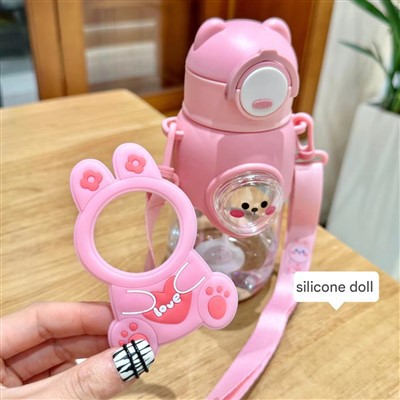
If you’re a retailer, a brand owner, or someone who needs a bulk order of high-quality, properly tested smart water bottles, I’d encourage you to reach out to our team to discuss your specific needs. We work with small local businesses and large national brands alike, and we can customize our bottles to fit your brand, your pricing needs, and your customers’ expected use. We don’t cut corners on testing or materials, because we know a smart bottle is only as good as its ability to keep your water (and your electronics) safe, no matter what life throws at it.
Silicone Water Bottle References
International Electrotechnical Commission. (2017). IEC 60529: Degrees of protection provided by enclosures (IP Code). Geneva, Switzerland: Author.
Consumer Technology Association. (2022). Consumer Electronics Waterproofing Guide: IP Ratings and Real-World Performance. Arlington, VA: Author.
Water Quality Association. (2021). Care and Maintenance of Reusable Water Bottles: Extending Product Lifespan and Functionality. Lisle, IL: Author.
Polywell International
Polywell International is one of the most professional smart/multi-functional water bottle manufacturers and suppliers in China, featured by quality products and good price. Please rest assured to buy advanced smart/multi-functional water bottle made in China here and get quotation from our factory. Customized orders are welcome.
Address: Building 3, Chengzhou Industrial Zone, No.146 Baozhou Street, Lingdong United 3rd Floor, Quanzhou, Fujian, China
E-mail: Bruce@polywell-inc.com
WebSite: https://www.cndrinkware.com/
