Hey everyone, if you’ve ever walked past a welding workshop, you might’ve seen a big machine spitting out neat, coils of welding wire that look way too perfect to be tangled up. As a welding wire winding machinery supplier, I get asked all the time—“wait, what even are the different types of machines that make those coils?” It’s not just one-size-fits-all, right? Different jobs call for different tools, and I’ve been in this long enough to know picking the wrong one can cost you time, money, and a whole lot of frustration. Let me break down the main types, the good and bad of each, and when you’d actually reach for them. Welding Wire Winding Machinery
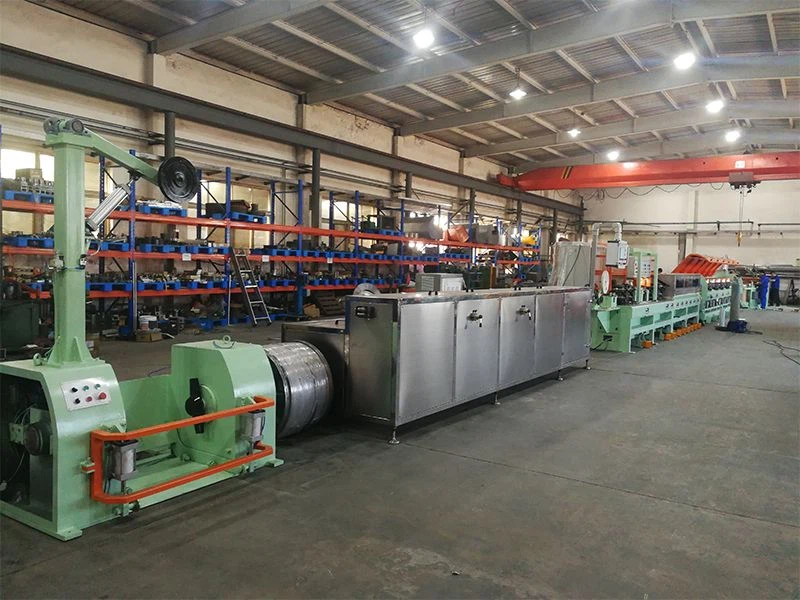
First off, let’s keep it simple: all these machines do the same core thing—wind welding wire onto spools, drums, or reels—but they’re built for totally different wire sizes, speeds, and output needs. Some are for small, precision spools for hobbyists, others for massive industrial drums that feed 100+ pounds of wire. Let’s start with the most common one you’ll see on most job sites: semi-automatic winding machines. These are the workhorses of the industry, and honestly, they’re the ones most of my regulars go for. Here’s how they work: you load the empty spool into the machine, thread the wire through a guide, hit start, and the machine winds it evenly. The only human work? Handling the full spool when it’s done and swapping in a new empty one. Why are they so popular? They’re flexible—you can adjust the winding speed, tension, and even the layer count to fit different wire thicknesses, from tiny 0.8mm MIG wire up to thicker flux-cored stuff. They’re also way cheaper than full automatic ones, so perfect for small to mid-sized fabrication shops, repair garages, or even welding supply stores that need a steady stream of spools. The downside? They need one person to run each machine, so if you’re cranking out 10,000 spools a week, you might need a crew. But for most folks, that tradeoff is worth it. I’ve had a customer who runs a small farm equipment shop swear by his semi-automatic—he cranks out 50 1kg spools a day with one guy, no issues, no downtime.
Next up, the big boys: fully automatic winding lines. These aren’t your backyard tools—they’re for high-volume industrial setups. What makes them different? They don’t need a human babysitter. They’re hooked up to a welding wire extruder or straightener, so raw wire comes in, gets cleaned, cut (wait, some can even cut wire to length if you want), wound onto spools, labeled, and boxed—all in one continuous line. No stopping to swap spools, no manual handling. If you’re a big manufacturer pumping out hundreds of thousands of spools a year, these are non-negotiable. The speed? Some can do up to 1,000 spools an hour—way faster than semi-automatic. They also handle all the tricky stuff, like maintaining perfect tension so the wire doesn’t kink or get loose. I work with a big welding brand that has three of these lines running 24/7, and they cut their labor costs by like 60% within the first year. But here’s the catch: they’re pricey, like six or seven figures pricey. And they’re not flexible—if you need to switch between wire types or spool sizes, you might need to swap out a bunch of parts, which takes time. So unless you’re doing massive volume, you don’t need to drop that kind of cash. No point in buying a Ferrari to drive to the corner store, right?
Then there’s the underrated one I don’t talk about enough: spool winding machines for small or specialty wire. Wait, not all welding wire is for big MIG guns. A lot of guys use small spools for TIG welding, or even tiny 0.5mm wire for tiny precision jobs like automotive body repair or jewelry welding. These are tiny machines, way smaller than semi-automatic ones, made just for those little 100g or 250g spools. They’re usually semi-automatic too, but super compact—you can stick one on a workbench, no need for a big floor space. My favorite part about these? They let you make custom spools for specialty wire, like hard-to-find stainless steel or aluminum wire that not every supply store carries. I’ve had a custom TIG welder client who uses one of these to make his own custom spools for different projects, and he saves a ton of money instead of buying pre-made ones. The only limit? They can’t handle big wire or big spools—max out at like 5lbs, usually. So if you need 25kg drums, skip this, but if you’re a hobbyist or small specialty shop, these are perfect.
Wait, there’s another type that’s huge for drums, not spools: drum winding machinery. I separated this because spools and drums are totally different. Drums are those big, heavy cylinders (think 30kg, 50kg, even 100kg) that feed welding wire straight into big welding machines, like those used in construction or shipbuilding. You can’t wind that stuff on a tiny spool—you need a machine built for massive, heavy loads. Drum winding machines are way sturdier, with thicker frames and stronger motors to handle that much wire. Some are semi-automatic, some fully automatic, depending on the volume. The cool thing about them is they can keep the wire tension super consistent even when you’re winding 50kg—no loose spots, no tangles, which is critical because if that wire tangles in a big construction weld, you’re wasting hours of work. I had a client who builds scaffolding; he switched from small spools to drums, and his downtime from wire tangles dropped by 80%. The downside? They take up a lot of floor space, and they’re not for small jobs. If you’re just doing car repairs, you don’t need a drum machine. But for industrial, it’s a game-changer.
Oh, and let’s not forget specialty winding machines, the ones for weird, specific jobs. Like, there are machines for flux-cored wire, which is thicker and has a core of flux, so you need a machine that winds it without crushing the flux core. Or there are ones for aluminum wire, which is softer than steel, so the tension needs to be dialed in perfectly to keep it from breaking. There are even ones for welding rope? No, wait, welding wire rope is different, but some specialized ones for that too. These are usually custom built, depending on what wire you’re working with. For example, if you’re dealing with high-strength steel wire for heavy equipment, a standard semi-automatic might not have enough tension control, so you need a specialty one. I’ve built a few custom ones for clients who work with aerospace-grade welding wire—they need zero tension variation, so the machine has a ton of sensors that adjust in real-time. These aren’t for everyone, but if you’ve got a super specific wire type, you can’t use a generic machine.
Now, I know what you’re thinking—how do I pick the right one? Let’s recap quick: if you’re small, occasional, hobbyist, or small specialty shop: go for a compact spool winding machine. If you’re mid-sized, making spools for general fabrication, garage work, or supply stores: semi-automatic winding machine. If you’re a big manufacturer cranking out hundreds of thousands of spools: fully automatic winding line. If you need big drums for industrial construction, shipbuilding, scaffolding: drum winding machinery. And if you’ve got a super specific wire type that needs extra care: specialty winding machine.
The last thing I’ll say is this: I’ve seen way too many people waste money on machines that are too big for their needs, or too small. A guy once came to me wanting a fully automatic line for his 50 1kg spools a week—total overkill, he would’ve spent 10x more than he needed, and the machine would’ve sat 90% of the time. Another client skipped a drum machine and tried winding 50kg wire on a semi-automatic, and ended up with so many tangles he had to rewind half the batch, costing him thousands in labor. That’s why I always ask people what their volume is, what wire they’re using, what spool/drum size they need, before I even suggest a machine.

If you’re in the market for a welding wire winding machine—whether you’re a hobbyist needing a tiny tabletop one, or a big industrial shop needing a full line—hit me up. I’ve been in this game long enough to know not just how to sell you a machine, but which one will actually fit your work, no fluff, no overpriced stuff that doesn’t work for you. Let’s chat through your needs, and find the right fit, no pressure.
Welding Wire Auxiliary Equipment References:
- Welding Wire Processing and Automation, 2022, Industrial Welding Machinery Association
- Guide to Winding Machinery for Metalworking, 2021, Global Manufacturing Insights
- Specialty Wire Handling Equipment Handbook, 2023, Fabrication Industry Resource Group
Three Water Machinery Co., Ltd.
Three Water Machinery Co., Ltd. is one of the most reliable manufacturers and suppliers of welding wire winding machinery in China. With abundant experience, we warmly welcome you to buy advanced equipment for sale here and get quotation from our factory. Contact us for more details.
Address: No.15, Jiaye Road, Liuanzhuang Industrial Park, Beichen District, Tianjin, China
E-mail: sales@eqet.com
WebSite: https://www.eqet.com/
