As a supplier of stability chambers, I get asked this question all the time—by lab managers setting up new pharmaceutical testing facilities, by food scientists verifying shelf life for consumer products, even by engineers developing aerospace components that need to survive extreme temperature swings. Most people hear “stability chamber” and picture a big metal box, but there’s way more going on behind that insulated door than just keeping things cool or warm. Let me break down exactly how these work, and why getting the right one isn’t just about ticking a box—it’s about accurate, reliable test results you can trust. Stability Chamber

First, let’s start with the core purpose: a stability chamber is a controlled environmental system designed to maintain precise, consistent temperature, humidity, and sometimes gas composition over extended periods. For industries like pharmaceuticals, this isn’t a luxury—it’s a regulatory requirement. The FDA, ICH (International Council for Harmonisation), and other global bodies mandate that drug manufacturers test how their products hold up under long-term storage conditions to get approval to sell them. A stability chamber that can’t hold a steady 25°C ±0.5°C and 60% RH ±2% for 6 months won’t just give bad data—it could delay a drug launch or lead to a product recall. Food companies use them too, to test if a new cereal will stay crisp on a store shelf, or a sauce won’t separate after a year. So this isn’t just lab equipment; it’s the backbone of product safety and reliability across multiple sectors.
Let’s talk about the main components that make a stability chamber tick, starting with the insulated enclosure. At first glance, it looks like a heavy steel box, but the insulation is the real star. We use high-density polyurethane foam insulation that’s sprayed between the inner and outer walls of the chamber—thick enough to prevent external temperature fluctuations from seeping in. For clients testing at very low temperatures (like -20°C for frozen drug samples), we add a layer of vacuum insulation panels too, which are more efficient at stopping heat transfer than foam alone. The inner walls are usually made of stainless steel, easy to clean and resistant to corrosion, which is non-negotiable for pharma where cross-contamination is a risk. The door has a magnetic gasket that creates an airtight seal—no gaps mean no humidity leakage, which is critical for humidity-controlled tests. Even small cracks can cause 10% humidity drift over a week, which would invalidate months of testing.
Next, the temperature control system. Stability chambers use either a mechanical vapor compression cycle (for most standard and refrigerated models) or a thermoelectric system (for smaller, benchtop units). Let’s stick to the mechanical system first—it’s what we install in 90% of our industrial and large benchtop chambers. Think of this like a super efficient fridge, but with way tighter controls. It has a compressor, condenser, expansion valve, and evaporator coil, all working in a loop with a refrigerant (we use ozone-safe HFCs now, no old R-22 refrigerants that harm the atmosphere). When you need to cool the chamber, the compressor squeezes the refrigerant into a hot, high-pressure gas, which flows through the condenser—usually a heat exchanger on the outside of the chamber—where it releases heat and turns into a liquid. That liquid then passes through the expansion valve, which drops its pressure suddenly, making it cold enough to absorb heat from the chamber’s interior as it vaporizes back into a gas. That continuous cycle pulls heat out of the chamber to lower temperature. To heat the chamber, we use electric resistance heaters, similar to the ones in a space heater, but controlled with precision. Here’s the part most people don’t grasp: the temperature sensors aren’t just one. We place multiple RTDs (Resistance Temperature Detectors, which are more accurate than thermocouples for steady-state testing) throughout the chamber, not just in one spot. If one sensor drifts, the system cross-references with the others to adjust the heating or cooling automatically, so the entire chamber stays within that ±0.5°C tolerance. That’s why a good stability chamber doesn’t have hot spots in one corner and cold spots in another—we calibrate the airflow to make sure air is evenly circulated.
Humidity control is where stability chambers separate from regular refrigerators or ovens. That’s a big one, because temperature alone isn’t enough. For high-humidity conditions (like 75% RH for accelerated stability testing of drugs), we need to add moisture to the air. Most chambers use a steam generator or a humidifier with purified water (no tap water, which has minerals that can leave deposits or contaminate samples). The system heats water to create steam, which mixes into the circulating air that flows through the chamber. For low-humidity conditions (like 10% RH for testing dried foods or biopharmaceuticals), we use a desiccant system—usually molecular sieves, which are porous materials that trap water molecules from the air, lowering humidity. Again, multiple humidity sensors (capacitive sensors, which are sensitive enough to measure small changes) are placed at different points, and the system adjusts the humidifier or desiccant in real time to hit your setpoint. I’ve had clients tell me their old lab chamber would swing 10% RH a day because it only had one sensor on the top shelf—samples on the bottom would sit at way higher humidity than what the data said. That’s a mistake we avoid with redundant, well-placed sensors.
Air circulation is another key component, and it’s easy to overlook. If air isn’t moving, you get temperature and humidity stratification—hot air rises, cold air sinks, moisture pools. A stability chamber has a fan (usually a quiet, brushless DC fan to reduce vibration, which is important for delicate samples like cell cultures) that pulls air from the interior, passes it over the heater, evaporator, or humidifier to adjust its conditions, then pushes it back into the chamber through vents spaced evenly on the walls. We design the vent layout so that air flows in a uniform pattern, usually in a laminar (smooth, non-turbulent) flow, so every part of the chamber is at the same temperature and humidity. For clients testing large batches, we can even add adjustable airflow baffles to tailor the flow if they’re storing big racks of samples. It’s not just about keeping air moving—it’s about keeping it moving consistently.
Now, the brain of the operation: the control system. This is the interface that lets you set your test conditions, program cycles, and log data for regulatory compliance. The best control systems for stability chambers are user-friendly but built for the long haul. They use PLCs (Programmable Logic Controllers) which are more reliable than basic microcontrollers for continuous operation—no glitches mid-test after months of running. You can program stepwise tests: for example, ICH long-term testing requires 25°C/60% RH for 6 months, then 30°C/65% RH for another 6, and the control system will automatically adjust conditions at the right time, no need for someone to check in manually. Most of our chambers log data every 10 minutes (some clients want minute-by-minute for high-stakes testing) and store it internally, or you can connect it to a LIMS (Laboratory Information Management System) for compliance reporting. We also build in alarms—text alerts, email notifications, and visual alarms on the door—if temperature or humidity drifts beyond your set tolerance, so you can act fast before test data is compromised.
Wait, let’s talk about calibration and reliability, too. A stability chamber is only as good as its calibration. We calibrate every chamber before it leaves our facility, using traceable standards that meet ISO 17025 requirements. That means the temperature and humidity readings on your control panel are accurate to within industry standards, so you can submit your test data to regulators without having to re-calibrate every few months. I always tell clients: don’t skimp on calibration. Even a chamber that’s working fine can drift over time, so we offer annual calibration services as part of our after-sales support, which is a big deal for regulated industries. We’ve had a client in the pharma sector that had a $2M test batch invalidated because their old chamber wasn’t calibrated, and the data they submitted to the FDA was off by 2°C. That’s a nightmare we work hard to prevent.
Let’s also cover the different types of stability chambers, because one size doesn’t fit all. Benchtop models are great for small labs or R&D departments that only test a few samples at a time—they take up less space, are easier to move, and start at around 1 cubic foot. For larger manufacturing or testing facilities, we offer floor-standing chambers from 5 cubic feet up to 100 cubic feet, which can hold hundreds of sample vials or food pallets. We also have specialized models: temperature-humidity chambers for extreme conditions (like -40°C to 180°C and 10% to 98% RH), dual-chamber systems for comparing two test conditions side-by-side, and even controlled atmosphere chambers that can adjust CO2 or nitrogen levels for testing products that degrade in air, like electronic components or certain biologics.
Now, common misconceptions I hear all the time. One is that a stability chamber is just a “big cooler with humidity.” No—coolers don’t have the precision controls for long-term, consistent testing, and they don’t have the redundant sensors or data logging required for regulatory use. Another is that you don’t need regular maintenance. A stability chamber that’s running 24/7 will have wear on the fan, the compressor, or the humidifier. Changing the air filter every 6 months, descaling the humidifier if you use deionized water, and checking the door gasket for cracks are all simple tasks that keep your chamber working for 10+ years. We give all our clients a maintenance guide, and our service team is on call if something goes wrong.
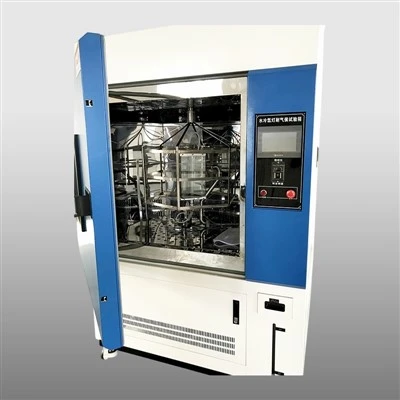
At the end of the day, a stability chamber’s job is to be invisible—you should set your test conditions, walk away, and trust that it’s working correctly. That’s what our team focuses on when we build each unit: not just hitting the setpoint, but keeping it there, day after day, month after month. If you’re looking to upgrade your current stability chamber, set up a new testing lab, or need to troubleshoot a unit that’s not performing, our team can help. We work with pharma, food, cosmetics, and aerospace clients around the world, and we know how critical reliable environmental testing is to your product’s success. Reach out to our team to discuss your requirements and find the right stability chamber for your needs.
Altitude Test Chamber References:
- International Council for Harmonisation (ICH) Q1A(R2): Stability Testing of New Drug Substances and Products, 2003.
- ISO 17025:2017, General Requirements for the Competence of Testing and Calibration Laboratories.
- FDA Code of Federal Regulations (21 CFR Part 211): Current Good Manufacturing Practice for Finished Pharmaceuticals.
- ASHRAE Standard 110-2016: Methods of Testing Airflow Resistance of HVAC Filters.
- European Medicines Agency (EMA) Guideline on Stability Testing of Active Substances and Medicinal Products, 2014.
ALP Technology (T&M) Ltd.
With abundant experience, we are one of the most reliable stability chamber manufacturers and suppliers in China. Please feel free to buy advanced stability chamber for sale here from our factory. All customized products are with high quality and competitive price.
Address: No.19, Mingde Road, Xi’an, China
E-mail: info@alp-environment.com
WebSite: https://www.alp-environment.com/
