If you’ve ever walked through a plastics processing plant, the whir of a drying machine paired with the constant hum of extruders or injection molders is a sound you’ll recognize—one that signals materials are being prepped to meet strict production standards. As a supplier of plastic drying equipment, I get asked a version of this question at least a dozen times a week: does our gear actually protect against over-temperature damage? It’s not just a random curiosity; overheating plastic resin is one of the most common, costly mistakes small to medium plastics manufacturers (and even some large facilities) make. Last year, a client I’d worked with for three years called me panicking at 2 a.m. Their 12-part drying system had tripped a circuit, and by the time maintenance got there, 20 pallets of PET resin were ruined—overheated, brittle, and unfit for molding. The root cause? A failed temperature sensor that no one had caught in time. That’s the exact scenario our team designs every piece of equipment to prevent, and today I want to break down how that protection works, why it matters, and what to look for if you’re shopping for drying gear. Plastic Drying Equipment
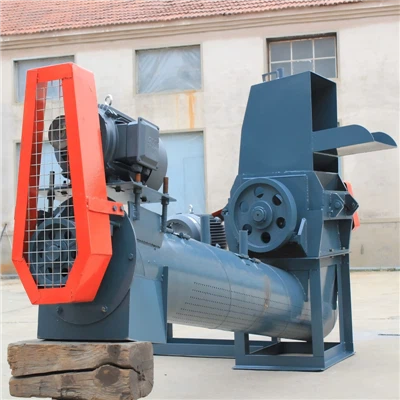
First, let’s ground this in the basics: why over-temperature is such a big deal for plastic resins. Most common resins—PET, ABS, PP, HDPE, even engineering plastics like nylon—require precise drying temperatures to remove residual moisture. For example, PET needs to be dried at 150–170°F (65–75°C) for injection molding; go 10 degrees above that, and the resin’s molecular structure starts to break down. That leads to weaker finished parts, surface defects, or even full product recalls. For nylon, which needs higher drying temps (175–195°F or 80–90°C), overheating past 200°F (93°C) causes “hydrolytic degradation,” turning what should be a smooth, tough part into a chalky, brittle mess that snaps under minimal stress. Beyond ruined materials, overheating can damage the drying equipment itself: broken heating elements, melted insulation, or even fire risks if flammable resin fumes (common with certain engineering plastics) are exposed to unregulated heat.
So back to the core question: yes, plastic drying equipment absolutely has protection functions against over-temperature. But not all of these systems are created equal. I’ve seen cheap, imported drying units that only have a single, basic thermal cut-off that kicks in if the temperature gets too high—no alerts, no diagnostics, just a hard shut-off that leaves you with a system that’s still too hot for hours and no clue why it happened. Our gear, on the other hand, has layered, active protection that works in real time, not as a last resort after damage is already done. Let’s walk through the key components:
First, the primary protection: calibrated, redundant temperature sensors. Every drying chamber on our units has two separate RTD (Resistance Temperature Detector) sensors, not just one. RTDs are more accurate and durable than the thermocouples used in cheaper equipment, and having two means if one drifts out of calibration (a common issue over time), the other takes over to monitor temperatures. For example, if a sensor reads 172°F for PET, which is within our target range, but the other reads 185°F, the system flags a discrepancy immediately, sends an alert to the plant’s control panel, and shuts off the heating element before it can reach dangerous levels. That’s not a hard shut-off after it’s too hot—it’s a proactive check that catches sensor failure before it leads to resin damage.
Next, the active temperature control loop. This is the brains of the operation, and it’s not just keeping the heat steady—it’s adjusting in real time to prevent spikes. Our drying systems use a closed-loop design, meaning the sensor readings are sent to a PLC (Programmable Logic Controller) that calculates exactly how much heat the resin needs, and adjusts the heating elements’ power output in 1-second increments. If the resin starts to absorb more moisture than expected (which would normally require a slight temperature boost), the PLC checks the current ambient air temperature, the resin’s feed rate, and even the humidity of the incoming dry air, then adjusts to stay within the 2–3°F tolerance we set for that resin. No more overheating because the heating element is stuck at full power even when it doesn’t need to be. For older drying systems or cheaper models, the heat is either on or off—no in-between, which creates constant temperature swings that often creep into overheating territory.
Then there’s the secondary, last-line-of-defense protection: high-temperature limit switches. These are mechanical (not electronic, so they don’t fail if the power glitches) sensors that are set 10–15°F above the maximum safe temperature for each resin type. If for some reason the control loop fails—say, a PLC glitch or a wiring issue that makes it ignore the sensor readings—the limit switch triggers. It doesn’t just trip a circuit; it sends a text or email alert to the maintenance team, logs the event in the system’s history, and keeps the temperature from going any higher. We test every limit switch during manufacturing, and we require our clients to calibrate them annually as part of our service package, so they never fail when they’re needed.
I can hear the next question now: “Great, but does this protection just work when the machine is new?” The answer is no—if maintained properly, these protection functions stay effective for years. But I’ve seen plenty of new installations where clients skip regular maintenance, and the protection starts to fail. A few years ago, a small custom molder in Ohio bought a basic drying unit from a overseas supplier that had a single thermal cut-off, no sensors. They didn’t clean the drying chamber for 18 months, so dust and resin residue built up on the heating elements, making them run hotter than they were designed to. The thermal cut-off worked, but it was set too high (the supplier had pre-set it for generic plastic, not their specific resin), so when it tripped, the resin was already overheated. The lesson here is that protection functions are only as good as the care you put into your equipment. That’s why our team doesn’t just sell you a machine—we provide 24/7 remote monitoring for clients who want it, annual calibration checks for sensors and limit switches, and training for maintenance teams on how to spot early signs of protection failure.
Another point that’s often overlooked: protection functions also extend to the drying air itself. Many people forget that dry air (used to pull moisture from resin) can get too hot too, especially if the system’s air handler is blocked or failing. Our drying equipment has airflow monitors that work in tandem with the temperature sensors. If the airflow drops below the required rate (because a filter is clogged, or a fan is failing), the system automatically lowers the heating output and sends an alert. Without that, even if the temperature sensor is working, the air being pushed through the chamber is too concentrated with heat, leading to uneven resin drying and localized overheating. I’ve seen that with a client in Texas last year—their plant has high ambient humidity, and their old drying unit had no airflow monitoring. The filter got clogged in the middle of a summer run, and by the time they noticed, half the resin in the chamber was overheated. Our units’ airflow protection would have caught that before any damage happened.
Let’s address a common myth: some manufacturers say “over-temperature protection adds cost, so you don’t need it if you set the temperature correctly.” That’s a risky gamble. Even with perfect setup, things go wrong: a power surge can blow a sensor, a filter can clog unexpectedly, a maintenance tech can misread a sensor and set the temperature too high during a resin change. I’ve had a client who was a long-time operator who swore he never had overheating issues—until he accidentally set the drying temp for nylon at 210°F instead of 195°F while rushing a big order. The basic unit he had at the time had no secondary limit switch, so by the time he noticed, 500 pounds of nylon were ruined. Our units have a resin-specific temperature preset function, so you can’t set it above the safe limit for the resin type you’re running—you have to manually override it with a password, which prevents that kind of human error. That’s a small feature that saves tens of thousands of dollars in material waste.
Now, if you’re in the market for plastic drying equipment, what should you look for to make sure it has solid over-temperature protection? First, avoid units that only have one temperature sensor and a single thermal cut-off. Ask for a specification sheet that shows redundant sensors, a closed-loop control system, and mechanical high-temperature limit switches. Second, look for airflow monitoring—this is often a cheap add-on that makes a big difference in preventing overheating caused by poor air circulation. Third, ask about calibration and maintenance support. A piece of equipment with great protection that’s not calibrated properly is useless, so make sure the supplier offers regular checks and training. Finally, don’t skimp on the alert system—text, email, and on-panel alerts mean you don’t have to be standing next to the machine to catch a problem.
At the end of the day, plastic drying equipment’s over-temperature protection isn’t just a “nice-to-have” feature—it’s a core function that protects your materials, your products, and your bottom line. The client I mentioned early on, the one with the ruined PET resin, upgraded to our system six months after that 2 a.m. panic call. Last quarter, they hit a peak production run with 50,000 pounds of PET, and their sensor flagged a slightly inaccurate reading 45 minutes into the run. They got an alert on their phone, checked the sensor, cleaned it, and avoided any waste. That’s exactly what we design for: not just fixing problems after they happen, but keeping them from happening in the first place.
If you’re dealing with recurring overheating issues, or you’re looking to upgrade your drying system to protect your production runs, I’d be happy to walk you through our equipment’s protection features, answer any specific questions about your resin types, or arrange a site visit to show our systems in action. Every facility’s needs are different, and the right over-temperature protection will depend on your resin mixes, production volume, and maintenance capabilities—let’s work together to find the solution that works for you.
Plastic Drying Equipment References
The Plastic Technology Handbook. Smithers Group, 2021.
"Resin Drying Best Practices for Injection Molding." Society of Plastics Engineers, 2022.
Thermal Protection Systems for Industrial Drying Equipment. International Institute of Plastics Processing, 2020.
Laizhou Yuening Machinery Co., Ltd.
As one of the most reliable plastic drying equipment manufacturers in China, we warmly welcome you to buy cheap plastic drying equipment made in China here from our factory. All customized machines are with high quality and low price. For pricelist, contact us now.
Address: Yuanjia Village, Luwang, Shahe Town, Laizhou City, Yantai City, Shandong Province
E-mail: yueningjixie@163.com
WebSite: https://www.ynplasticmachinery.com/
