Hey folks, let’s cut to the chase—if you’ve ever dabbled in ceramics production, you know how messy and unpredictable chemistry can get. One wrong mix, and your latest batch might come out cracked, dull, or just plain brittle, no matter how much time you spent trimming and glazing. Today, I wanna talk about a silent workhorse that’s been saving my ceramic clients’ butts for years: Potassium Dihydrogen Phosphate, or KH2PO4 if you’re short on time (we all are). As someone who’s been supplying KH2PO4 to ceramic workshops and manufacturing lines for over a decade now, I’ve seen this stuff fix more problems than any random “pro tip” from a guy at a trade show. Let’s break down exactly what it does, why it matters, and why you should probably stop sleeping on it. Potassium Dihydrogen Phosphate

First, let’s get the basics outta the way so we’re not talking past each other. KH2PO4 is an inorganic salt, super soluble in water, kinda like table salt but with a fancy phosphate backbone and potassium kick. In ceramics, it’s not just a additive—it’s a multi-tool that works at every stage, from mixing the raw clay to firing the final piece. Let’s start with the part most people struggle with: body preparation. If you’ve ever worked with raw clay, you know it’s finicky—too dry and it cracks while you’re throwing on the wheel, too wet and it sticks to everything (your hands, your bat, your favorite apron that you swear is “ceramic-resistant” but clearly isn’t). KH2PO4 acts as a deflocculant here, and no, that’s not just a fancy word for “it makes clay flow better.” Deflocculants break apart the tiny clay particles that clump together, right? When those clumps disperse, the clay slips get thinner, more uniform, and way easier to work with. I’ve had a client who makes large-format floor tiles tell me that before they started using our KH2PO4, their slip was so thick they’d have to mix it for 4 hours straight just to get it to pour through their spray nozzles. Now? They cut mixing time in half, zero clogs, and the tiles are way more consistent. That’s the real win here.
But wait, there’s more to deflocculation than just making slip easier. When you add KH2PO4 to a ceramic body, it also affects the water content. Less water means less shrinkage when the clay dries, right? Shrinkage is one of the biggest culprits of cracked or warped pieces—especially for larger items like planters or vases. Our clients who do hand-thrown pottery love this because they can throw a big piece and not have to baby it for a week as it dries; the shrinkage is so controlled that even thick, detailed pieces come out straight, no extra sanding needed. I should note that it’s not the only deflocculant out there—some people use sodium silicate or soda ash—but here’s where KH2PO4 shines: it’s way less corrosive. Those other ones can eat through your mixing tanks or spray systems over time, leading to expensive repairs. We’ve had customers switch from sodium silicate to our KH2PO4 and cut their maintenance costs by almost 30% in the first year. That’s not chump change for a small workshop or a mid-sized manufacturer.
Next up: the firing stage, which is where a lot of the magic happens, and where KH2PO4 really pulls its weight. Firing ceramics is basically turning soft clay into a hard, durable material through heat, right? The temperature usually ranges from low-fire (around 1,800°F) to high-fire (up to 2,400°F) depending on the clay type. KH2PO4 acts as a flux here. Fluxes lower the melting point of the ceramic body, which means you don’t have to crank the kiln as high to get the right densification. That’s a big deal for energy costs—firing is one of the most expensive parts of ceramics production, after labor. I had a client who runs a small commercial kiln that fires 500 pieces a week; when they started using our KH2PO4 as a flux, their kiln’s gas usage dropped by 18%. Multiply that over a year? That’s thousands of dollars they can put back into marketing or new equipment instead of paying the utility company.
But wait, fluxing isn’t just about saving money. It also affects the final properties of the ceramic. KH2PO4 helps form a glassy phase in the body as it fires, which makes the piece stronger and more resistant to water absorption. For things like mugs or dinnerware, that’s non-negotiable—you don’t want a coffee mug that leaks after a few washes, right? Our clients that make tableware swear by this: their mugs go through 1,000+ dishwasher cycles without cracking or absorbing flavors, which is a huge selling point for their customers. Also, the glassy phase from KH2PO4 makes the body more homogeneous, so there are no weak spots that can cause chips or breaks. I’ve seen clients go from 8% breakage rate on their tableware to less than 2% after switching to KH2PO4. That’s less waste, less rework, and more profit.
Now, let’s talk about glazes, because that’s where KH2PO4 really shows its versatility. A lot of people don’t realize that KH2PO4 isn’t just for the ceramic body—it works wonders in glazes too. Glazes are what give ceramics their color, shine, and protective coating, and getting them to apply evenly is half the battle. KH2PO4 acts as a deflocculant in glazes too, same as in the body, but it also adjusts the viscosity and improves suspension. What does that mean? It means the glaze doesn’t settle at the bottom of your bucket while you’re working. Ever had a glaze bucket where all the pigment and silica sink to the bottom, so every time you dip a piece, you get a thick, lumpy coat on one side? That’s the worst. KH2PO4 prevents that settling, so your glaze is consistent from top to bottom. Our clients who do dipping glazes love this because they can dip 20 pieces in a row and every single one has the same coat thickness, no touch-ups needed.
Another thing KH2PO4 does in glazes is adjust the maturing temperature. Glazes need to melt just enough to form that smooth, glassy layer, and KH2PO4 helps them do that at lower temperatures, same as in the body. For low-fire potters, that’s game-changing because they don’t have to invest in a high-temperature kiln. I had a freelance potter in Portland tell me that before using our KH2PO4, her low-fire glazes were either too dull or ran all over the piece during firing. Now, she gets consistent, vibrant glazes every time, and she can fire her kiln 2 hours faster, which means more pieces per week and more income. Also, KH2PO4 can reduce crazing—you know, that fine network of cracks that form in a glaze after firing, usually from thermal expansion differences between the body and glaze. Crazing is unsightly and can make glazes porous, so getting rid of it is a big win. Our clients that sell decorative pottery care a lot about this because crazing makes their pieces look cheap, and they can’t sell them.
Let’s address some myths here, because I’ve heard ’em all. Some people say “KH2PO4 is only for high-fire ceramics” or “it’s too expensive for small batches.” First, no—we supply to everyone from one-person home potters with a 1-cubic-foot kiln to large manufacturers doing 10,000 pieces a week, and it works for both low-fire (earthenware, stoneware) and high-fire (porcelain) pieces. Second, while KH2PO4 might cost a little more upfront than some cheaper additives, the savings from less shrinkage, lower breakage, lower energy costs, and less downtime add up fast. For a small workshop, the extra cost is like $50 a month, but the savings are $200+ a month. That’s a no-brainer.
Another myth: “it’s toxic or bad for the environment.” Nope, KH2PO4 is actually non-toxic, which is huge for workshops that have people working with it every day. Unlike some other chemicals used in ceramics, it doesn’t release fumes when mixed or fired, so you don’t need extra ventilation (though of course, good airflow is always a good idea). And it’s biodegradable, so if you have leftover slip or glaze, you can dispose of it without worrying about it hurting the environment. That’s a big one for small business owners who care about sustainability and don’t wanna deal with hazardous waste disposal fees.
Now, let’s get real about what you need to actually use KH2PO4, because no one wants a vague “it’s great!” pitch. The dosage depends on what you’re using it for, right? For deflocculating a clay slip, it’s usually 0.1% to 0.5% by weight of the dry clay. For fluxing the body, it’s 1% to 3% by weight. For glazes, it’s usually 0.2% to 1% by weight of the glaze batch. Start low—you can always add more, but you can’t take it out. Pro tip: dissolve KH2PO4 in water first before adding it to your clay or glaze, that way it mixes evenly and you don’t get clumps. I’ve had a few new clients try to just toss the powder into their mix and end up with lumpy slip, so trust me on that step.
At the end of the day, ceramics production is all about efficiency, consistency, and quality. You can have the best clay, the most skilled potters, and the fanciest kiln, but if you don’t have the right additives to make everything work together, you’re gonna waste time, money, and materials. As someone who’s been in this game for years, I’ve seen KH2PO4 turn struggling workshops into profitable businesses, and it’s still one of the most versatile additives out there.
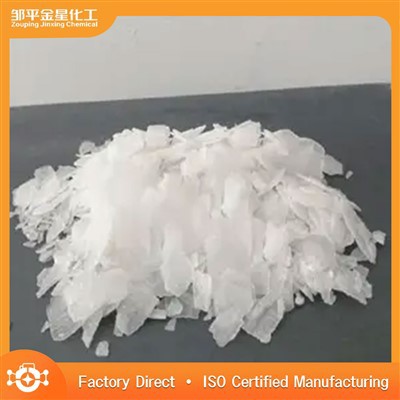
If you’re curious about testing it out, we can hook you up with a sample so you can try it in your next batch—no strings attached. Whether you’re a home potter just starting out or a large manufacturer looking to cut costs and improve quality, we can help you figure out the right dosage and application for your specific needs. Stop dealing with cracked pieces, lumpy glazes, and sky-high utility bills. Let’s chat about how KH2PO4 can make your ceramics production way smoother and more profitable.
Potassium Sulfate References:
- Tite, M. S. (1999). Ceramic Technology and Ancient Pottery. Cambridge University Press.
- Semiat, R., et al. (2002). Deflocculation of Aqueous Clay Suspensions with Potassium Dihydrogen Phosphate. Journal of the European Ceramic Society, 22(12), 1987-1995.
- Carter, W. B., & Norton, M. G. (2007). Ceramic Materials: Science and Engineering. Springer.
- Lee, W. E., & Rainforth, W. M. (1994). Ceramic Microstructures: Property Control by Processing. Chapman & Hall.
- Van der Perre, S., et al. (2018). Additives for Glaze Control in Low-Fire Ceramics. Journal of Ceramic Science and Technology, 9(3), 245-254.
Zouping Jinxing Chemical Co., Ltd.
Zouping Jinxing Chemical Co., Ltd. is one of the most reliable potassium dihydrogen phosphate manufacturers and suppliers in China, also supports customized service with low price. Please feel free to wholesale cheap potassium dihydrogen phosphate in stock here from our factory. For free sample, contact us now.
Address: Guojia Village, Jiaoqiao Town, Binzhou City, Shandong Province, China
E-mail: admin@zpjxhg.com.cn
WebSite: https://www.zpjinxing.com/
