Hey there! As a supplier of hydraulic pumps, I often get asked about the differences between hydraulic pumps and water pumps. It’s a common question, and one that’s important to understand if you’re in the market for either of these types of pumps. So, let’s dive right in and break it down. Hydraulic Pump
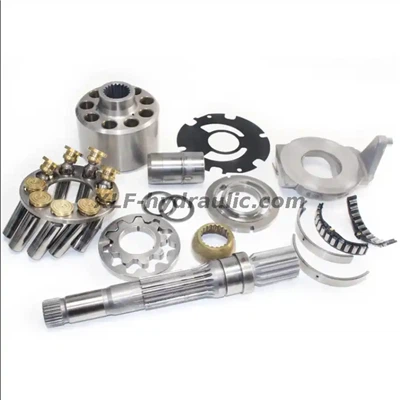
First off, what’s the basic deal with these two types of pumps? Well, at a high – level, both are designed to move fluids around, but that’s where the similarities start to end.
Water pumps are pretty straightforward. Their main job is to move water from one place to another. You’ll find them in all sorts of everyday situations. For example, your home’s water supply system probably has a water pump. It pumps water from the well or the municipal supply into your house. In gardens, water pumps are used to move water from a pond or a storage tank to the sprinkler system. On a larger scale, water pumps are crucial in industries like agriculture, where they’re used to irrigate fields.
The design of water pumps is usually optimized for water, which is a relatively low – viscosity fluid. They generally work at lower pressures compared to hydraulic pumps. Most water pumps are centrifugal pumps. These pumps use an impeller that spins at high speeds. As the impeller spins, it creates a centrifugal force that pushes the water outwards, causing it to flow through the pump and into the pipes. It’s a simple and reliable system for moving large volumes of water.
Now, let’s talk about hydraulic pumps. Man, these are some powerful machines! Hydraulic pumps are at the heart of hydraulic systems, which are used in a wide range of industrial, construction, and automotive applications. For instance, in construction equipment like excavators and bulldozers, hydraulic pumps are what make the big arms and buckets move with such precision. In cars, hydraulic pumps are used in power steering systems to make it easier to turn the wheel.
Hydraulic pumps work by converting mechanical energy into hydraulic energy. They move a special hydraulic fluid, which is usually a type of oil, throughout the hydraulic system. This fluid is used to transmit power from one part of the system to another. The key thing about hydraulic pumps is that they can generate incredibly high pressures. This high – pressure fluid can then be used to drive hydraulic cylinders, motors, and other components.
One of the big differences between hydraulic pumps and water pumps is the pressure they can handle. Hydraulic pumps can generate pressures that are way higher than what a water pump can typically achieve. Water pumps usually operate at pressures of around 10 – 100 psi (pounds per square inch), while hydraulic pumps can easily reach pressures of 1000 – 5000 psi or even more. This high – pressure capability is what allows hydraulic systems to perform heavy – duty tasks.
Another difference lies in the type of fluid they use. Water pumps are designed specifically for water. Using any other fluid in a water pump can damage the pump or reduce its efficiency. On the other hand, hydraulic pumps use hydraulic fluids, which have special properties. These fluids are designed to have good lubricating properties to reduce wear and tear on the pump components. They also have a high viscosity index, which means their viscosity doesn’t change too much with temperature variations. This is important because hydraulic systems can get pretty hot during operation.
The construction and design of the two types of pumps are also different. Hydraulic pumps are generally more complex and robustly built. Since they operate at high pressures, they need to be able to withstand a lot of stress. The internal components, like the pistons, cylinders, and valves, are made from high – quality materials that can handle the high – pressure environment. Water pumps, being simpler in operation and for a less demanding application, can be built with less expensive materials.
In terms of efficiency, both types of pumps are designed to be as efficient as possible, but for different reasons. Water pumps are optimized for moving large volumes of water with as little energy as possible. This is important, especially in applications where they’re running for long periods, like in a water treatment plant. Hydraulic pumps, however, are focused on converting mechanical energy into hydraulic energy with high efficiency. Since hydraulic systems are often used in heavy – duty applications where power consumption can be a big factor, efficiency is crucial to reduce operating costs.
Let’s talk about maintenance for a bit. Water pumps usually require less maintenance compared to hydraulic pumps. Water is a relatively clean and non – corrosive fluid, so there’s less wear and tear on the pump components. You might just need to do some basic checks like making sure the impeller is clean and the seals are in good condition. Hydraulic pumps, on the other hand, need more regular maintenance. The hydraulic fluid needs to be changed at regular intervals to prevent contamination, which can damage the pump and other components in the system. Also, since hydraulic pumps operate at high pressures, any leaks or faults can lead to serious problems, so it’s important to conduct frequent inspections.
Now, let’s get into the applications a bit more. Water pumps are mainly used for moving water. As I mentioned earlier, in domestic supply, irrigation, and water treatment plants. But they’re also used in HVAC (Heating, Ventilation, and Air Conditioning) systems to circulate water for cooling or heating.
Hydraulic pumps, however, have a much broader range of applications. In the manufacturing industry, they’re used in presses, injection molding machines, and conveyor systems. In the aviation industry, hydraulic pumps are used in flight control systems. And in the marine industry, they’re used in steering systems and winches.
If you’re in the market for a pump, it’s really important to understand these differences. If you just need to move water around, a water pump is the way to go. But if you have a high – pressure application that requires transmitting power using a fluid, then a hydraulic pump is what you need.
As a hydraulic pump supplier, I’ve seen firsthand how important it is to choose the right pump for the job. We offer a wide range of hydraulic pumps that are suitable for different applications. Whether you need a small pump for a simple hydraulic system or a large, high – pressure pump for heavy – duty industrial use, we’ve got you covered.
Our pumps are made with the highest quality materials and are designed to be reliable and efficient. We also provide excellent after – sales service, including maintenance advice and spare parts. If you’re not sure which pump is right for you, our team of experts is here to help. We can assist you in selecting the pump that meets your specific requirements.
So, if you’re in the market for a hydraulic pump or just want to learn more about them, don’t hesitate to get in touch. We’re always happy to have a chat and discuss your needs. Whether you’re a small – scale business or a large industrial operation, we can work with you to find the perfect hydraulic pump solution.

Let’s start a conversation about how we can make your hydraulic system work better. Reach out to us and let’s see if we can find the ideal hydraulic pump for your project. We’re committed to providing you with the best products and service in the industry.
Hydraulic Pump References:
"Pump Handbook" by Igor J. Karassik et al.
"Fluid Power with Applications" by Anthony Esposito
Wuhan Xinlaifu Hydraulic Equipment Co., Ltd.
Wuhan Xinlaifu Hydraulic Equipment Co., Ltd. is one of the most professional hydraulic pump manufacturers and suppliers in China, featured by high quality OEM&ODM products. Please feel free to buy customized hydraulic pump from our factory.
Address: Liansu Industrial Park, No.1, Xincheng 11th Road, Dongxihu District, Wuhan, Hubei, China
E-mail: service@xlf-hydraulic.com
WebSite: https://www.xlf-hydraulic.com/
