Hey there! As a supplier of wire-to-board connectors, I’ve seen firsthand how crucial it is to choose the right one for your project. You might be scratching your head, wondering where to even start. Well, don’t worry! I’m here to break it down for you. Wire-to-Board Connector
Understanding Your Needs
First things first, you need to understand what your project requires. Are you working on a small, low – power device like a smartwatch? Or is it a high – power industrial machine? This will determine a lot about the type of connector you need.
For low – power applications, you can get away with connectors that have a lower current rating. These are usually smaller and more lightweight. They’re perfect for things like wearable tech, where space is at a premium. On the other hand, high – power applications demand connectors that can handle a large amount of current without overheating. Think of big manufacturing equipment or electric vehicles.
Another thing to consider is the voltage. If you’re dealing with high – voltage circuits, you’ll need connectors that are designed to insulate properly and prevent arcing. Low – voltage applications, like most consumer electronics, don’t have the same strict insulation requirements.
Pin Configuration
Pin configuration is super important. It’s all about how the pins are arranged on the connector. The number of pins you need depends on the number of electrical connections your device requires. For a simple circuit with just a few connections, you might only need a 2 – pin or 3 – pin connector. But for more complex systems, like a motherboard in a computer, you could need a connector with dozens of pins.
You also need to think about the pin spacing. Smaller pin spacing allows for more connections in a smaller area, which is great for compact devices. However, it can also make the connector more difficult to work with, especially when it comes to soldering. Larger pin spacing is easier to handle but takes up more space.
Connector Type
There are several types of wire – to – board connectors out there. Let’s take a look at some of the most common ones.
Board – Mount Connectors
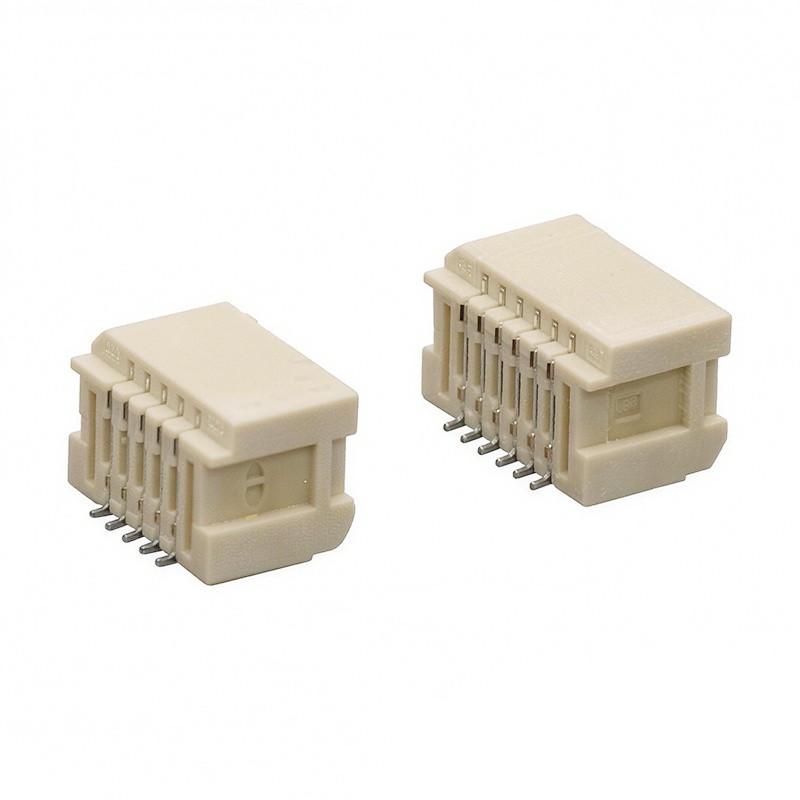
These are connectors that are directly mounted onto the printed circuit board (PCB). They’re usually soldered in place. Board – mount connectors are great for applications where you need a stable and permanent connection. They come in different styles, like through – hole and surface – mount. Through – hole connectors are inserted into holes in the PCB and soldered on the other side. Surface – mount connectors, on the other hand, are placed directly on the surface of the PCB and soldered.
Cable – Mount Connectors
These connectors are attached to the end of a cable. They’re often used when you need to connect a cable to a board. Cable – mount connectors can be either plug – in or screw – down types. Plug – in connectors are easy to use and can be quickly connected and disconnected. Screw – down connectors provide a more secure connection but take a bit more time to install.
Locking Connectors
If you’re working in an environment where vibrations or movement are common, locking connectors are a must. These connectors have a locking mechanism that keeps them securely attached to the board. This prevents accidental disconnection, which can be a real headache in a critical application.
Environmental Considerations
The environment in which your connector will operate plays a big role in your choice. If your device will be used in a wet or humid environment, you’ll need a connector that is waterproof or at least moisture – resistant. Some connectors come with special seals or coatings to protect against water and moisture.
In a dusty or dirty environment, you’ll want a connector that can keep out debris. There are connectors with dust covers or gaskets that can help prevent dust from getting inside and causing problems.
Temperature is another factor. If your device will be exposed to extreme temperatures, you need a connector that can handle it. Some connectors are designed to work in a wide temperature range, from very cold to very hot.
Material and Durability
The materials used in the connector can have a big impact on its performance and lifespan. The contacts in the connector are usually made of metals like copper or brass. Copper is a great conductor of electricity, but it can corrode over time. Brass is more resistant to corrosion but may not be as good a conductor.
The housing of the connector is often made of plastic. Different types of plastic have different properties. Some plastics are more flexible, while others are more rigid. You’ll want to choose a plastic that can withstand the conditions of your application.
Durability is also key. You don’t want a connector that will break or wear out easily. Look for connectors that have been tested for things like insertion and extraction cycles. A connector that can handle a high number of cycles will last longer and be more reliable.
Cost
Let’s face it, cost is always a factor. You want to get the best connector for your money. But remember, the cheapest option isn’t always the best. Sometimes, spending a little more on a high – quality connector can save you money in the long run. A cheap connector might break or malfunction, leading to costly repairs or replacements.
When comparing prices, make sure you’re comparing apples to apples. Look at the features and specifications of each connector. A connector with more features or better performance might cost more, but it could be worth it for your project.
Compatibility
Your connector needs to be compatible with the rest of your system. This includes the PCB, the cable, and any other components. Make sure the connector has the right pin configuration and voltage rating to work with your device.
If you’re using a specific type of cable, make sure the connector is designed to work with that cable. Some connectors are only compatible with certain types of cables, so it’s important to double – check.
Testing and Certification
Before you choose a connector, it’s a good idea to look for ones that have been tested and certified. There are standards like UL (Underwriters Laboratories) and CE (Conformité Européene) that ensure the connector meets certain safety and performance requirements.
Testing can also give you an idea of how well the connector will perform in your application. Look for connectors that have been tested for things like electrical conductivity, insulation resistance, and mechanical strength.
Making the Right Choice
So, how do you put all this information together and make the right choice? Start by making a list of your requirements. Write down things like the power requirements, pin configuration, environmental conditions, and budget.
Then, start researching different connectors. Look at the features, specifications, and prices of each one. You can also read reviews from other users to get an idea of how well a connector performs in real – world applications.
Once you’ve narrowed down your options, it’s a good idea to get samples. This way, you can test the connectors yourself and see how they work in your system.
If you’re still not sure, don’t hesitate to reach out to a supplier. As a wire – to – board connector supplier, I’m always happy to help. I can answer your questions, provide more information, and even recommend the best connector for your project.
Conclusion

Choosing the right wire – to – board connector is a crucial step in any project. By considering factors like your needs, pin configuration, connector type, environmental conditions, material, cost, compatibility, and testing, you can make an informed decision.
Automotive Connector If you’re in the market for wire – to – board connectors, I’d love to have a chat with you. Whether you’re working on a small consumer device or a large industrial project, I can help you find the perfect connector. Just reach out, and we can start discussing your requirements.
References
- "Connectors 101: A Beginner’s Guide to Choosing the Right Connector" by Electronics Weekly
- "The Ultimate Guide to Wire – to – Board Connectors" by Digi – Key Electronics
- "Connector Basics: How to Select the Right Connector for Your Application" by Mouser Electronics
Wenzhou JKUN Connector Co., Ltd.
As one of the most professional wire-to-board connector manufacturers and suppliers in China, we’re featured by quality products and low price. Please rest assured to wholesale bulk customized wire-to-board connector from our factory. For quotation and free sample, contact us now.
Address: No.2667, Ningkang East Road, Yueqing City, Zhejiang Province, China
E-mail: sales@cnjkun.com
WebSite: https://www.jkunjcj.com/
